
Income Insurance Online :: News
SHARE

Share this news item!

Harvest Fires Put Mallee Crop Losses in Sharp Relief

Fire-damaged crops raise questions about sums insured, evidence and continuity planning

Harvest Fires Put Mallee Crop Losses in Sharp Relief?w=400

The information on this website is general in nature and does not take into account your objectives, financial situation, or needs. Consider seeking personal advice from a licensed adviser before acting on any information.

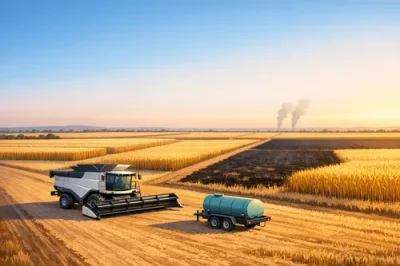
Seven fires across Victoria’s north-west Mallee on Tuesday 10 November have turned harvest-season fire risk into an immediate business issue for grain growers.
ABC Rural reported on 11 November 2026 that the Country Fire Authority estimated about 300 hectares of crops were destroyed, including lentils near Walpeup and barley near Nandaly, with dry lightning and harvest activity among the triggers.

The timing matters. Crops close to harvest can represent months of input costs, seasonal risk and expected income sitting exposed in the paddock. A fire at that stage is not only a production loss; it can affect cash flow, grain contracts, machinery movements, labour plans and next season’s preparation. It also highlights how quickly a local incident can become a regional problem when multiple fires stretch emergency resources.

For insurance purposes, the key lesson is not simply that fire is a covered peril under many rural policies. The practical question is whether the relevant crop insurance section, declared crop values, acreage records, excesses, notification requirements and exclusions match the way the farm is actually operating at harvest. Farmers may also need to consider the boundary between standing crops, harvested grain, machinery, fencing, stored inputs and other property, because different policy sections can respond differently.

  • Keep paddock maps, crop type records and expected yield estimates up to date.
  • Record photos or drone footage before and after damage where it is safe to do so.
  • Document firefighting costs, contractor delays and clean-up work separately.
  • Check whether machinery, fencing, hay, fuel and stored grain sit under separate limits.

The CFA’s separate fire danger period updates this week also point to a wider seasonal issue: strong spring growth can create heavy fuel loads that dry quickly as warmer weather arrives. That makes natural disaster preparation more than a pre-summer checklist. Firebreaks, header maintenance, local communications, water access and neighbour response plans can all influence whether a small ignition remains manageable or spreads into a larger loss.

No policy can remove the frustration of losing a strong crop days before harvest, and insurance outcomes will depend on individual wording and evidence. However, these Mallee fires are a timely reminder that renewal conversations should include harvest-stage exposures, not just buildings and machinery. For mixed and broadacre farms, the most useful review is often the one that traces how value moves across the season: from growing crop, to harvested grain, to stored produce and then to sale.

Published:Thursday, 12th Nov 2026
Author: Paige Estritori

Please Note: We do not endorse any specific products or companies. Some content is sourced from third parties, including press releases, and may not be independently verified for accuracy or completeness.

Share this news item:

Rate this article

0 Comments

No comments yet. Be the first to share your thoughts.

Insurance News

NHVR Prohibition Notice Puts Fleet Systems Under the Insurance Microscope
12 Nov 2026: Paige Estritori
A fresh National Heavy Vehicle Regulator action against a heavy vehicle operator is a timely reminder that insurance risk is not limited to what happens at the moment of a crash. The NHVR announced on 30 October 2026 that it had issued a prohibition notice after identifying significant and ongoing safety risks, including repeated defects in safety-critical systems and concerns about the operator’s management controls. - read more
Diagnosis timing is not the only test for income cover
12 Nov 2026: Paige Estritori
A recent income protection dispute has put fresh attention on a difficult but important issue for Australian workers: a medical condition may be treated as pre-existing even where a formal diagnosis comes later. The case, reported on 9 November 2026, involved a prostate cancer claim that was declined after the Australian Financial Complaints Authority accepted that earlier medical warning signs and specialist investigations were enough to trigger a pre-existing condition exclusion. - read more
Fuel Recovery Order Restarts, Raising Insurance Budget Questions
12 Nov 2026: Paige Estritori
The Fair Work Commission’s varied fuel cost recovery order will restart obligations from 23 November 2026, requiring covered road transport contractual chains to account for higher fuel costs against the 6 March 2026 benchmark. For truck operators, the immediate issue is contract pricing, but the insurance angle is also important: cash flow, route choices, subcontracting arrangements and vehicle utilisation all influence how risk is presented and managed. - read more
Court Ruling Highlights Why TPD Wording Matters for Business Owners
12 Nov 2026: Paige Estritori
A Queensland Court of Appeal decision involving AIA Australia has put renewed attention on how technical policy conditions can affect total and permanent disability claims, and why business owners should not treat insurance wording as a background detail. The case concerned group TPD cover held through superannuation, but its broader message is relevant to SMEs that rely on life, TPD and disability-style cover to protect debt, ownership arrangements and business continuity. - read more
Latest Claims Data Shows Why Policy Structure Still Matters
12 Nov 2026: Paige Estritori
APRA’s latest life insurance claims and disputes statistics, released on 16 October 2026 and covering the 12 months to 30 June 2026, provide a useful reminder for Australian businesses: the practical value of cover often depends on how clearly it is structured, documented and understood before a claim ever arises. - read more


Income Protection Articles

Income Protection vs. Total Permanent Disability: Which Is Right for You?
Financial security is crucial in today's unpredictable world, where unexpected events can disrupt the stability and comfort of our daily lives. For Australians, protecting one's income and lifestyle from unforeseen circumstances is a key component of personal finance. - read more
Finding Accidental Coverage When Comprehensive Income Protection Isn't an Option
Income protection is an integral part of maintaining your financial security, especially in the event that unforeseen illnesses or injuries prevent you from working. Enabling you to receive a percentage of your regular income, this type of insurance provides a safety net, ensuring that you can continue to cover your living expenses and financial obligations whilst recovering. - read more
How Income Protection Insurance Claims Work in Australia
Income protection insurance claims involve more than lodging a form. In Australia, claimants usually need to show they meet the policy definition of disability, provide medical and income evidence, complete the waiting period and keep the insurer updated while benefits are assessed or paid. - read more
Income Protection vs. Life Insurance: What's Best for You?
Financial protection is an essential aspect of sound financial planning. It ensures that you and your family are safeguarded against unexpected events that could lead to financial hardship. Two common types of financial protection are income protection insurance and life insurance. - read more
Income Protection Insurance and Tax Benefits: What You Should Know
Income protection insurance is a type of cover designed to provide you with a safety net if you are unable to work due to illness or injury. By offering regular payments that replace a portion of your income, it helps ensure that you can maintain your lifestyle and cover essential expenses during challenging times. - read more

Knowledgebase
Occupational Hazard:
A risk associated with the nature of a particular occupation, which may affect insurance premiums.